
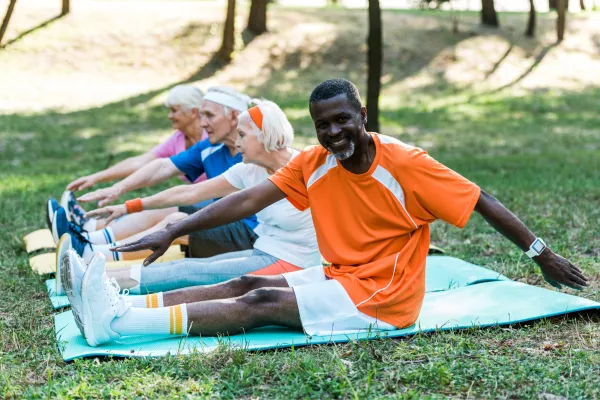
The Benefits of Stretching
Transform Your Health
The Health Benefits of Stretching
Why this simple habit might help you live longer
Most of us don’t get excited about stretching. But recent research suggests we probably should. Stretching positively affects many of our body’s systems.
A 2020 study found that stretching — even after accounting for other exercise — was linked to a significantly lower risk of death from all causes. Then a 2023 study backed it up: Korean adults who stretched at least five times per week had about a 20% lower risk of death over the study period than adults who didn’t stretch at all. Surprisingly, that outcome even slightly outperformed high-volume cardio and strength training.
So, what makes stretching so powerful?
What Stretching Actually Does
When we talk about stretching, we usually mean static stretching— getting into a position and holding it long enough to lengthen the muscle and improve range of motion. And it doesn’t need to be painful. You can increase flexibility simply by stretching to the initial point of discomfort. In other words, gentle works.
The Key Benefits of Stretching
1. It May Improve Strength
Stretching and strength training both create tension in muscles and connective tissues. That tension activates proteins called integrins, which trigger signals involved in muscle growth.
Some studies have shown small increases in strength and muscle size from stretching alone. While traditional strength training is significantly more efficient, older or less-active adults may benefit even more from stretching-induced strength gains.
2. It Supports Heart and Vascular Health
This is one of stretching’s most overlooked benefits. Poor flexibility has been linked to stiffer arteries. Stretching, on the other hand, has been associated with:
Improved vessel function
Lower resting heart rate
Reduced blood pressure
Increased vasodilation (when blood vessels relax and widen)
Being more flexible also makes movement easier, even the blood, which usually leads to more physical activity overall.
3. It May Improve Performance
According to sports massage therapist Joe Yoon, author of Better Stretching: “When you can get into the positions your sport or activity requires, you’ll likely perform better and with less injury risk.”
Past research suggested static stretching before workouts reduced strength, speed, or power — but a 2016 review clarified why. Those negative effects typically appeared only when:
Stretches lasted longer than 60 seconds per muscle, or
Performance tests were done immediately after stretching
Solution:
Keep static stretches under a minute and mix them with active warm-up movements.
4. It Helps Prevent Injuries
Muscle strains usually happen at the point where tissue is stretched the tightest. Increasing flexibility gives muscles more room to safely generate force. For athletes, that means fewer pulls during explosive movements.
For everyone else, better flexibility helps with balance, reduces fall risk, and may really can soften the impact of a fall if it happens.
How Much Stretching Do You Need?
Not as much as you think, but you need to focus on consistency: A little bit every day only takes a few minutes. Here’s a simple example:
If your back is tight, do puppy pose once or twice a day
Hold 30 seconds up to 2 minutes
Add cat-cow for gentle movement
And because the body is interconnected, stretching one area often improves mobility elsewhere:
Stretch the upper back → shoulders move better
Stretch the hips → knees and lower back feel better
This even happens temporarily through what’s known as non-local transfer. Because it’s all connected, lower-body stretches can immediately improve upper-body mobility, and vice-versa.
Why It May Relate to Longevity
If stretching truly lowers mortality risk, it’s likely due to a combination of effects:
Easier movement
Fewer injuries
Improved balance
Better circulation
Healthier blood vessels
Small gains in strength
Whether you’re stretching or weight training, the message is sent throughout your entire body.
The Bottom line:
Stretching is simple, low-cost, low effort a quiet powerhouse for lifelong health.


