
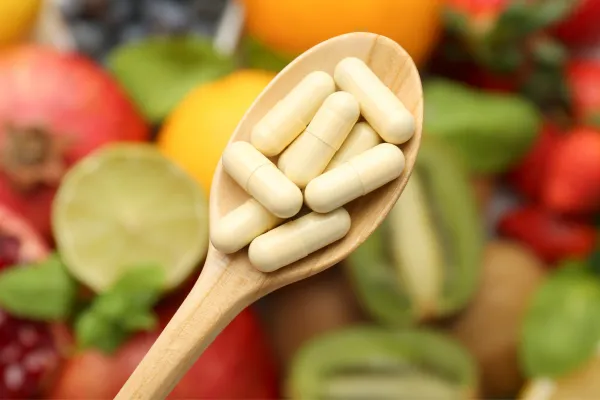
Can Dietary Supplements Slow Ageing and Improve Health ?

Should I Take Supplements?
Why there Are Many Things to Consider
Emerging research is saying yes for certain supplements, particularly antioxidants. Research suggests that specific supplements - like vitamin D and omega-3 fatty acids - may help protect brain health and lower your chance of dementia. If you have low levels of vitamin D, B12, or zinc, taking vitamin supplements can improve memory and thinking skills. Several studies have shown zinc can shorten the duration of colds and minimize their intensity. There is also evidence that magnesium supplements promote joint health and help alleviate pain.
For other supplements, further research is needed to prove they are beneficial. To help answer the question “should I take supplements”? one needs to examine 5 different factors about food.
1.Food is not what it used to be.
We have all heard the adage “you are what you eat”. However, that saying takes on new meaning in the 21st century. According to the USDA, 60% of calories consumed by Americans come from processed and ultra-processed foods. Not only are processed foods lower in nutrient value, but they most often also contain harmful chemicals that are detrimental to your body systems and cells. One example of harmful chemicals in our foods are pesticides. Each year the organization, Environmental Working Group, publishes a list of produce foods that contain the highest levels of pesticides called “The Dirty Dozen” As a result, they urge us to purchase the organically grown versions of these foods.
In addition, processed foods contain many additives incorporated to increase shelf life, and “improve” flavor and texture. The USDA and the FDA label these additives as GRAS (Generally Recognized As Safe) allowing them to be added to foods. However, there is a growing body of evidence that these additives may interfere with digestion, alter metabolic pathways, and are not recognized as “real” food by our bodies, therefore increasing our appetite. As a result, the FDA has recently determined that the safety of some of these additives are questionable and announced in April of this year it will phase out several synthetic dyes (Red dye No.3, Yellow dye No.5 & Yellow dye No. 6) commonly used in many foods.
To get the low down on the safety and effectiveness of food additives get the book, A Consumer’s Dictionary of Food Additives by Ruth Winter.
2.Lower nutrient density of foods.
As kids we were all told by our parents to “Eat Your Vegetables”. The problem is that, as another adage goes, “these aren’t your father’s vegetables”. Numerous studies have shown that, in general, our fruits and vegetables contain as much as 50% fewer nutrients than they did 50 years ago. As an example, check this link from the National Institutes of Health.
There are several reasons for this.
Soil Depletion: As a result of industrial farming. Our soil contains less nutrients than they used to, causing the plants grown in them to have fewer nutrients.
Less Crop Varieties. There are much less varieties of crops than there used to be. With industrial farming, crops are now engineered and grown for speed of growth, size, color, sweetness, resistance to drought & disease and shelf-life, often at the expense of nutrient density. For example, decades ago, there were over a thousand apple varieties. Now in the United States, about 90–100 apple varieties are grown commercially. However, the number of these varieties that you’ll actually find at a typical grocery store at any given time is much smaller, usually only around 10–15 different apples throughout the year. This same practice applies to many other fruits and vegetables as well.
3.Shelf-life
Foods lose a certain percentage of their nutrient value if eaten long after they are picked. This is why, contrary to common sense, frozen fruits and vegetables (if picked fresh and frozen right away) maintain their nutrient value much longer than food eaten many days after being picked
4.Ageing
Whether it’s vitamins, minerals, fiber, or even protein, conventional wisdom told us that it’s best to get them from foods instead of pills or powders. However, the truth has changed. As we age, we absorb nutrients less effectively. For example, with age, you can start to lose more calcium than you absorb. That can make your bones break more easily (osteoporosis), especially for women after menopause. Among other things, changes to our stomach lining combined with our bodies producing fewer digestive enzymes, means we absorb less of the nutrients from the foods we eat. Some of the common nutrients that older adults are deficient in are Calcium, Vitamin D, Vitamin B12, Vitamin B6, Zinc, Selenium, Magnesium, Omega 3’s, and antioxidants. However, ageing doesn’t mean you need more food, it means you need more absorbable nutrition. This means eating more nutritionally dense foods, namely more fresh fruits and vegetables and/or dietary supplements.
However, that’s easier said than done. According to the Cleveland Mayo Clinic, to have that well balanced diet, we need to consume at least 6 servings of fruits and vegetables per day. This is referred to as the 1-2-3 method.
However, this recommendation is a minimum and it’s actually preferable to get at least 8-10 per day for optimal nutrition. Simply said, that is not easy to do. How many of us are eating 3 servings of fruits or veggies at dinner. That is where supplementation comes in. This is true especially because even if we eat well balanced diet, as we age, we absorb less of the nutrients we consume. For a good analysis of what supplements we may need, check out the latest issue of Consumer Reports, Guide to Popular Supplements, Jan-Feb 2026 issue.
According to a 2016 study supported by the U.S. National Institute on Aging, "super-agers" are people 65 and older who have the brains and cognitive skills of 25-year-olds. What did they eat? A Mediterranean diet primarily consisting of plenty of fish, fruits, vegetables, whole grains, and olive oil, a diet that is rich in Antioxidants and Omega 3’s.
5. The Role of Antioxidants
Your body's natural defenses against cell damage are antioxidants, phytochemicals primarily produced by plants. Although our bodies can produce some, most come from eating plants. Antioxidants are chemicals that combat free radical damage, many caused naturally from age. However, most free radical damage occurs primarily from stress, toxins, pollution and diet, specifically from the consumption of highly processed foods. These free radical bad guys can also be the result of environmental exposures to tobacco smoke, the sun, and skin & hair products. Many food nutrients fall into the category of antioxidants, the “good guys”. These include vitamins A, C and E, and minerals such as selenium, copper and zinc, and are found in fruits, vegetables, whole grains, herbs and spices—and in foods with healthy fats like nuts, and beverages like green tea and coffee.
Think of a free radical as a pinball careening around inside your body, constantly smashing into other cells, disrupting normal cell functioning. The cells can’t do their jobs properly because these bad guys keep storming the gates. If the body isn’t able to defend itself and the free-radical production becomes excessive, it leads to cell damage that contributes to aging (yes, including wrinkles), heart disease, cancer, Alzheimer’s and host of other diseases. Too many free radicals can damage your body's DNA, cell membranes, and other structures, a process otherwise known as oxidative stress, which is a main factor in accelerated ageing.
So, antioxidants are the body’s first line of defense to prevent that accelerated ageing from happening. Think of them as little molecules flying through our bloodstreams, like superheroes wearing capes. When they encounter free radicals, they neutralize them (by using their powers to do things like donate electrons to balance out the unpaired electrons that cause the free radicals to wreak havoc.
Types of Antioxidants
A description of all the antioxidants would require a mini course in chemistry. So, here are the main types in a “Nutshell”
Vitamins: While vitamins C and E are probably the most recognized antioxidants, vitamin A and a few B vitamins like B2 (riboflavin) B12 (cobalamin) also exhibit antioxidant properties. Vitamin C (ascorbic acid), a water-soluble antioxidant, is commonly found in citrus fruits. Vitamin E is a fat-soluble vitamin present in nuts, seeds, and vegetable oils.
Carotenoids: A group of pigments that give your fruits and vegetables their bright yellow, red, and orange colors. Beta-carotene, lycopene, zeaxanthin, and lutein are types of carotenoids.
Polyphenols: A broad class of plant chemicals naturally found in foods like spirulina, dark chocolate, berries, kale, wine, nuts and olive oil. These are the most abundant kind of antioxidants found in our food.
Flavonoids: These are the largest subgroup of polyphenols and can be further classified into important groups like flavanols, and anthocyanins.
Trace minerals: Other antioxidants like selenium, copper, manganese, and zinc are trace minerals that act as cofactors for antioxidant enzymes like superoxide dismutase and glutathione peroxidase.
The Health Benefits of Antioxidants
Since free radicals exist throughout the body, fighting them off with antioxidants can have wide-ranging effects that impact multiple systems. Think of lower risk of chronic diseases, slowing the aging process, and more. In other words, you get a lot of bang for your buck when it comes to the health benefits of antioxidants. Here are a few of the most exciting:
Safeguards cellular health
Reduced Cancer risk
Improved Heart Health
Better Brain Functioning
Reduces inflammation
Supports immune function
May support vision
Promotes healthy skin
Supports hair growth
It’s important to elaborate on a few of the primary benefits of antioxidants
1. Reduced Cancer Risk
The relationship between antioxidants and cancer prevention is complicated. Many lab studies show how antioxidant molecules can kill tumor cells or prevent cancer cell proliferation, but that doesn’t always translate to “ingest this antioxidant, prevent this cancer” in a human. So far, the body of research is not yet conclusive that taking antioxidant supplements can prevent cancer, but many studies do show benefits of eating foods rich in antioxidants.
For example, high intake of cruciferous vegetables, which contain multiple antioxidants, is associated with reduced risk of colorectal cancer. A review of observational studies found eating antioxidant-rich nuts is associated with lower risk of colorectal, endometrial and pancreatic cancer. And eating olive oil, a truly antioxidant-packed food, is associated with a lower risk of all cancers, including breast.
2. Improved Heart Health
Oxidation of cholesterol is a major factor in the development of heart disease because it contributes to the build-up of plaque on artery walls, which can slow down or block blood flow. And which nasty molecules contribute to oxidation? You guessed it: free radicals. Antioxidants, then, should help prevent that process.
However, just like with cancer prevention, the research so far suggests supplementing with antioxidants has not yet shown a direct correlation with preventing heart disease. Yet diets high in antioxidant-rich foods—like leafy greens, a variety of veggies, nuts, seeds, and whole grains—have been associated with lower risk of heart disease over and over. Sweet potatoes, for example, contain both vitamin E and beta carotene. So, pop one in the oven instead of popping a pill.
3. Better Brain Health
Free radicals go after your brain, too, and as you age, it can be harder for nerve cells to defend themselves. That’s where antioxidants come in. Research suggests that flavonoids—found in the highest amounts in colorful fruits and vegetables like berries, spinach, and squash (and in coffee and dark chocolate!)—have the potential to “exert a multiplicity of neuroprotective actions within the brain, including a potential to protect neurons against injury induced by neurotoxins, an ability to suppress neuroinflammation, and the potential to promote memory, learning and cognitive function."
While more research is needed on exactly how eating a diet rich in flavonoids impacts brain health, one study found that older women who ate more blueberries and strawberries over time had a slower rate of memory decline than others.
And another antioxidant, vitamin E—found in leafy greens, nuts and seeds—shows promise in terms of protecting the brain from age-related memory loss. One study on patients with mild to moderate Alzheimer’s Disease, for example, found that supplementing with vitamin E slowed the progression of cognitive decline.
How To Include Antioxidants in Your Diet
Eat a Rainbow of Colorful Foods and Take Your Supplements
All of that is to say that these molecules really are pretty incredible, and eating foods that contain them as often as possible is a great idea.
One way to determine a food’s antioxidant power is by checking its ORAC (Oxygen Radical Absorbance Capacity) score. The ORAC scale is a way to determine which foods are richest in antioxidants. It essentially measures how well the components of a food mop up free radicals in the bloodstream. It’s not a perfect scale, but it is a reference point.
Here’s a tip. You’ll find the highest antioxidant values attached to colorful, plant-based foods such as blueberries, kale, apples, sweet potatoes, etc. but don’t forget about dark chocolate, coffee and green tea, other good sources of antioxidants. Lastly, some of the common spices with the highest antioxidant punch are cinnamon, turmeric, cloves, ginger, and oregano.
In other words, most antioxidants are found in the healthy foods you should be eating anyway for other important nutrients.
Stay Tuned for Part 2 Coming Soon: The Effect of Processed Foods, Satisfaction, & Sustainability.
What about Supplements?
Walk into any health food store and you will face a dizzying array of supplements. As a general rule, it’s best to consult with one’s health care provider before taking a supplement, especially those with high doses as they can interfere with certain medications or conditions.
You generally want a lower dose supplement, especially those that are formulated to supply a more balanced combination of antioxidants, because they are generally much safer and can be used in combination with diet. Also, just like with foods, there is no “one size fits all”. So, you may wish to choose a supplement to help target a specific health goal, such as Gut Health, Immunity support, Bone & Joint support, Brain/Heart Health, or Anti-Aging formulations.
The Bottom Line
Your overall focus should be on maintaining a nutrient-dense diet that’s filled with a variety of fruits, veggies, whole grains and spices. This way, you’ll be taking in a variety of powerful antioxidants naturally, without going overboard. According to the USDA, one-half of all our plates should be fruits and vegetables.
However, most Americans are not even coming close to that. In order to follow these guidelines, we would need to eat as follows.
So how do we get more antioxidants in our diet equivalent to getting 8-10 fruits and vegetables per day.
There are three basic ways of doing this:
A) improve your diet.
B) make smoothies with lots of fruits & veggies.
C) take supplements to boost your antioxidant level.


